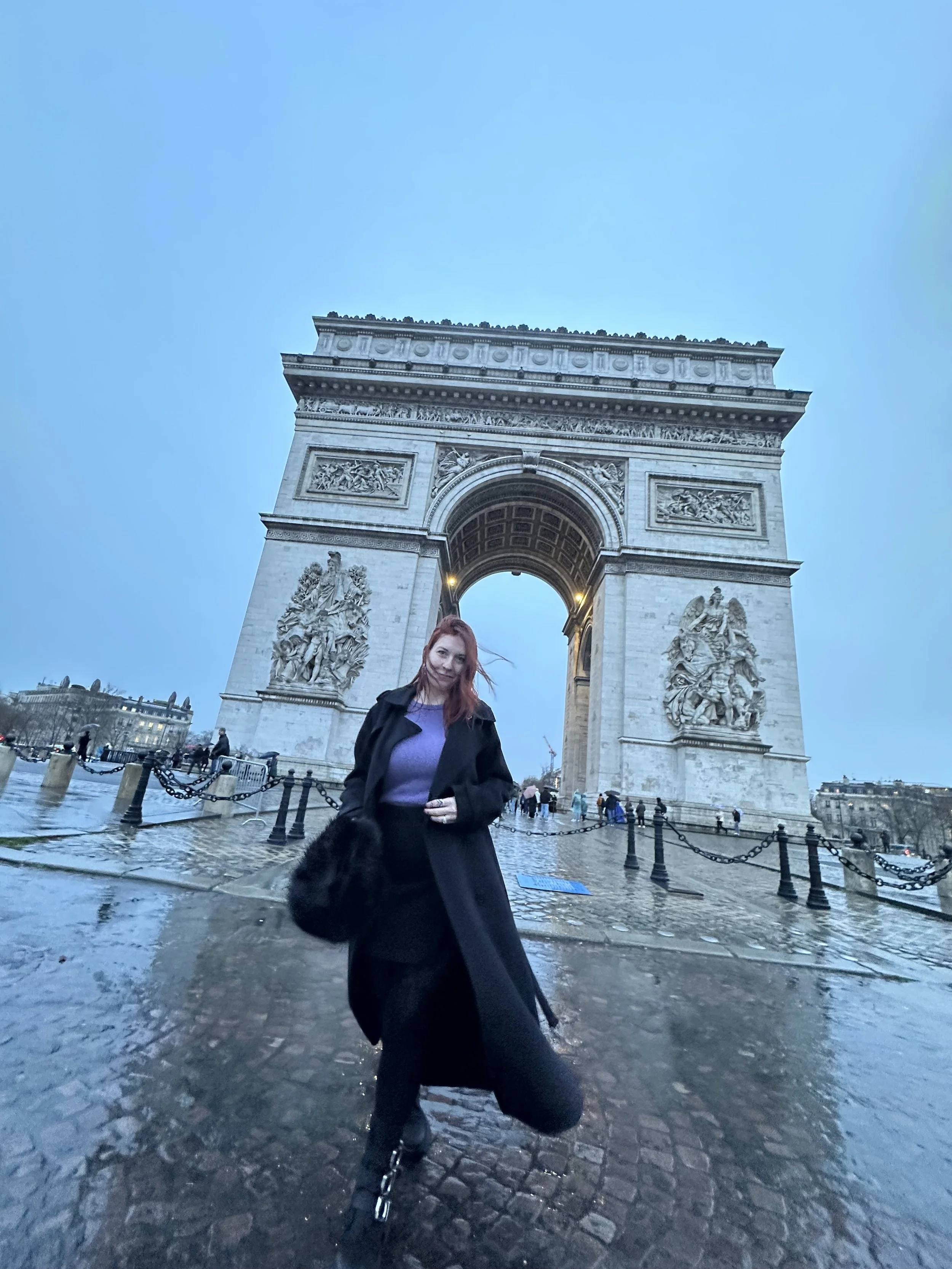
Hi, I’m Ash Mcilrath Riffe.
I’m a Seattle-based designer and Interior Architecture student at Ohio University, where I’m pursuing my Bachelor of Fine Arts and graduating in 2026. Originally from a small town in northeastern Iowa, I’ve always been drawn to art, architecture, and the way spaces can shape how we feel.
One of my earliest memories of architecture was visiting the Lowell and Agnes Walter House in Quasqueton, Iowa, a Frank Lloyd Wright home. I was probably around seven years old, but I still remember being completely stunned by its beauty. That experience stayed with me. Even then, I could feel that a space could be more than just functional, it could be moving, inspiring, and unforgettable. That early sense of wonder still drives the way I approach design today.
Before returning to school, I spent nearly a decade in Seattle working in luxury furniture showrooms and design-focused roles. My experience includes showroom management, procurement, merchandising, client relations, project coordination, and design consultation. I’ve had the opportunity to work with respected brands and studios including B&B Italia, Inform Interiors, Codor Design, J. Garner Home, and Alchemy Collections, collaborating with interior designers, architects, and private clients on high-end residential projects and showroom environments.
That chapter of my career gave me an incredible education in materials, furnishings, presentation, and the business side of design. It also confirmed what I had long felt: that I wanted to fully pursue interior architecture as my life’s work.
What draws me most to this field is the intersection of beauty and purpose. I’m interested in creating interiors that are not only visually compelling, but also deeply responsive to the people who use them. My studies have strengthened my skills in Revit, Twinmotion, programming, and pre-design, while expanding my experience in both residential and commercial work. I love the full design process, from early concept development to shaping a complete, cohesive environment.
My aesthetic is influenced by a mix of classic modernism, historical character, bold materials and colors, and client’s lived experiences. I’m especially inspired by spaces that honor the past while feeling fresh and relevant in the present. I have a deep appreciation for collected spaces, homes and interiors that feel personal, layered, and full of character.
Another passion of mine is travel. Seeing architecture, craftsmanship, and everyday beauty in different places has expanded the way I think about interiors. From doors, ceilings, and floors to textures, colors, and cultural details, I’m constantly inspired by the built environment and the stories it holds. That perspective continues to shape how I design and how I observe the world.
In my free time, I love to travel (as mentioned) with my fiancé, Scott, paint, draw, refinish and upholster furniture, and I also have an upcycled leather jewelry and art business.
At the heart of it all, I believe good design should feel intentional, beautiful, and deeply human. My goal is to create spaces that are both elevated and welcoming- spaces that people remember.
This isn’t just design—it’s a reflection of what I believe in. I’m here to create work that matters, led by a commitment to quality and care.
My practice is rooted in a philosophy that treats design as a lasting conversation between past, present, and future. I pursue a holistic, client-centered approach that honors history, respects the environment, and elevates daily living through beauty, purpose, and restraint. My ethos rests on the following pillars:
Design Approach
Timeless Elegance
Enduring quality over fleeting trend: materials, proportions, and details are chosen for their permanence and evolving relevance.
Subtle luxury: quiet, refined surfaces, precise craftsmanship, and clarity of form that age gracefully without shouting for attention.
Proportion and restraint: elegant scale, restrained ornament, and thoughtful rhythm create spaces that feel inherently refined.
Biophilic Design
Nature as a core driver: daylight, views of greenery, natural ventilation, and organic forms connect occupants to the living world.
Material tactility: tactile textures, earthy tones, and natural fibers foster sensory richness and well-being.
Indoor-outdoor harmony: seamless transitions, courtyards, terraces, and garden rooms blur boundaries and invite seasonal changes.
Health and performance: design choices that support circadian rhythm, air quality, acoustic comfort, and mental clarity.
Sustainability & Longevity
Material honesty: provenance, lifecycle impact, and circularity guide every choice from sourcing to disposal.
Durable essentials: high-quality foundations (structure, finishes, systems) designed for resilience, repairability, and long service life.
Regenerative practices: energy efficiency, mindful water use, low-emission materials, and stewardship of resources throughout the project lifecycle.
Adaptive reuse where appropriate: extending the life of existing structures through sensitive intervention and modern clarity.
Bold Colors & Artistic Flair
Color as a narrative: deliberate, expressive palettes that enliven spaces while maintaining legibility and balance.
Artistic collaboration: integration of commissioned artwork, crafts, and bespoke details that reflect client values and place.
Playful restraint: bold interventions are purposeful, anchored by quiet spaces and careful composition to avoid visual fatigue.
Layered meaning: color, texture, and light combine to reveal moods and moments that evolve with time of day and occupancy.
Historic Preservation
Contextual integrity: design respects and reveals the character-defining elements and narratives of a place.
Delicate modernization: technology and programmatic updates are integrated in a way that is reversible where possible and clearly distinguishable from historic fabric.
Storytelling through materiality: patinas, textures, and authentic references create a sense of continuity with the past while embracing contemporary needs.
Compliance with stewardship standards: collaboration with conservation guidelines, architects, and heritage authorities to balance preservation with progress.
Client-Centered, Purposeful Design
Humanity at the center: priorities emerge from listening—lifestyle, rituals, work patterns, and aspirations of each client.
Clarity of intent: every decision serves a defined objective, whether comfort, function, beauty, or meaning.
Transparent process: collaborative dialogue, phased milestones, and adaptive plans that respect budgets, timelines, and evolving goals.
Personal legacy: spaces that reflect identity, nurture relationships, and age gracefully alongside the people who inhabit them
Artful Synthesis
Integration over imposition: architecture, interiors, landscape, craft, and technology converge to create cohesive, breathable environments.
Quiet confidence: design speaks softly but with conviction—assertive in essence, generous in experience.
Ethical leadership: responsibility to clients, communities, and the planet guides every choice, from supplier selection to end-of-life considerations.
Applications & Practices
Integration over imposition: architecture, interiors, landscape, craft, and technology converge to create cohesive, breathable environments.
Quiet confidence: design speaks softly but with conviction—assertive in essence, generous in experience.
Ethical leadership: responsibility to clients, communities, and the planet guides every choice, from supplier selection to end-of-life considerations.
Outcome
A built environment that feels inevitable—elegant, responsible, and alive with presence. Spaces that honor the past, respond to present needs, and endure with beauty and purpose for generations to come.